
Beyond Square Footage: What Really Drives Luxury Home Values in South Tampa?
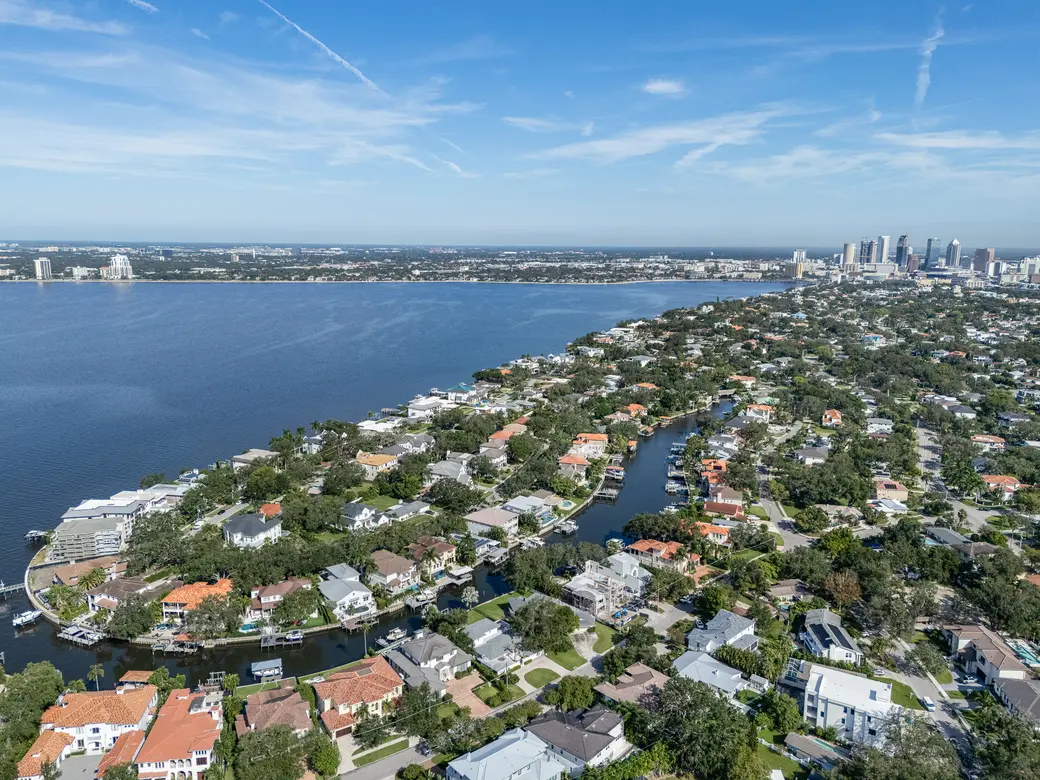
Why land, location, waterfront characteristics, and construction age can matter more than broad market averages.
In South Tampa's luxury real estate market, two homes with similar square footage can command substantially different prices — sometimes within the same neighborhood, occasionally on the same street. Comparable interior space does not translate automatically into comparable value.
The explanation usually lies beyond the residence itself.
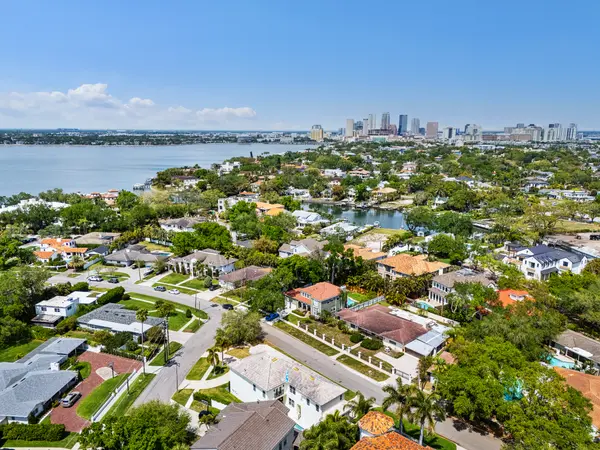
Lot characteristics, waterfront access, construction quality, architectural relevance, and the scarcity of a particular property type all shape how buyers evaluate competing options. These distinctions are especially pronounced in established neighborhoods such as Davis Islands, Beach Park, Sunset Park, and Hyde Park, where older residences, newly built estates, and redevelopment opportunities occupy the same streets.
An analysis of 554 single-family home sales of $1 million or more across ZIP codes 33606, 33609, 33611, and 33629 — covering October 1, 2025, through September 30, 2026 — provides useful perspective on how these factors interact.
The findings reinforce a principle that experienced buyers and sellers encounter quickly: price per square foot is a useful point of orientation, but it is not a substitute for understanding the property.
The Limits of a Convenient Metric
Price per heated square foot is among the most frequently cited figures in residential real estate. It offers a quick way to compare properties, track pricing patterns, and identify potential gaps between competing homes. The metric becomes unreliable, however, when properties have fundamentally different underlying characteristics — or when the buyer is primarily acquiring the land rather than the improvements.
A 2026 transaction at 62 Adalia Avenue on Davis Islands illustrates the distinction clearly. An older residence on an open-bay waterfront parcel sold for approximately $7.1 million. Dividing that price by the existing home's heated square footage produces approximately $2,194 per square foot — a number that would be misleading applied as a benchmark for finished residences in the same area.
Based on property-specific transaction knowledge, the sale reflected land value rather than the residential utility of the existing improvements. The buyer was acquiring a scarce waterfront location. In that context, the price-per-square-foot calculation tells us relatively little about comparable finished homes nearby. Treating it as though it does can distort both valuations and negotiations.
This distinction between land-driven sales and sales reflecting the residential utility of existing improvements is particularly consequential in mature luxury neighborhoods, where desirable parcels and older homes frequently coexist.
Land: The Value Beneath the Residence
Across South Tampa, the underlying homesite often represents a significant — and sometimes dominant — component of a property's overall value.
In the 554-transaction dataset, median sale prices increased consistently across successive lot-size quartiles. Properties in the smallest quarter of the lot-size distribution recorded a median sale price of approximately $1.33 million; those in the largest quarter recorded approximately $2.46 million. This relationship reflects, in part, the fact that larger parcels frequently accommodate more living area, and the improvements themselves contribute to the transaction price. A direct land-value premium cannot be isolated from these figures alone.
What the data does support is a more fundamental observation: lot size, configuration, and development potential deserve independent consideration alongside the home itself.
Width, depth, shape, setbacks, applicable development restrictions, and the placement of existing improvements can all influence a parcel's usability and longer-term potential. A property near Hyde Park Village — such as 1902 Watrous Avenue, an older home on an irregularly configured, MLS-reported 14,730-square-foot lot with substantial mature tree coverage — illustrates how location and site characteristics interact in ways that a square-footage comparison cannot resolve. The proximity to one of South Tampa's established retail and dining districts may be an important consideration for buyers. So are the need to evaluate lot configuration and mature trees when considering future improvements or redevelopment.
A larger lot does not automatically confer proportionately greater flexibility.
For buyers, understanding those distinctions is essential to evaluating what is actually being purchased. For sellers, identifying the characteristics that make a parcel desirable — and being candid about those that may limit its use — can meaningfully influence both pricing strategy and buyer positioning.
Waterfront: Why the Designation Is Only the Beginning
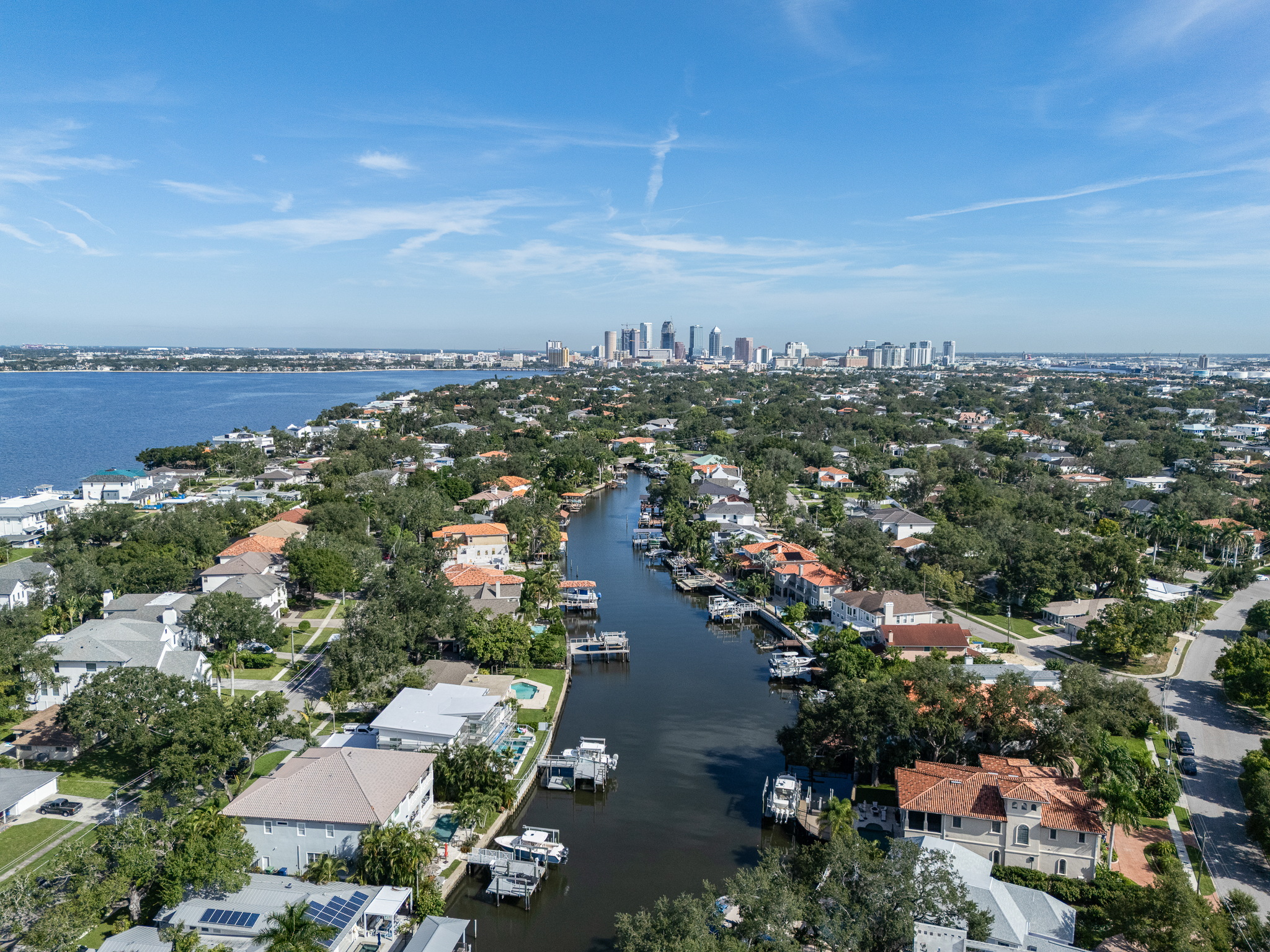
Waterfront property represents one of the clearest examples of South Tampa's differentiated luxury market, and one of the clearest illustrations of where broad statistics require careful interpretation.
Among the 554 transactions examined, 40 were identified as waterfront properties. The median waterfront sale price was approximately $4.36 million, compared with approximately $1.60 million for non-waterfront properties. Median price per heated square foot was approximately $872 for waterfront homes and approximately $498 for non-waterfront homes.
These differences are substantial. They should not, however, be read as a direct measure of the premium attributable solely to water access. Waterfront homes in the sample generally occupied larger lots, contained more living area, and represented a different distribution of locations and property types than the non-waterfront group. The figures describe the segment; they do not isolate a transferable adjustment.
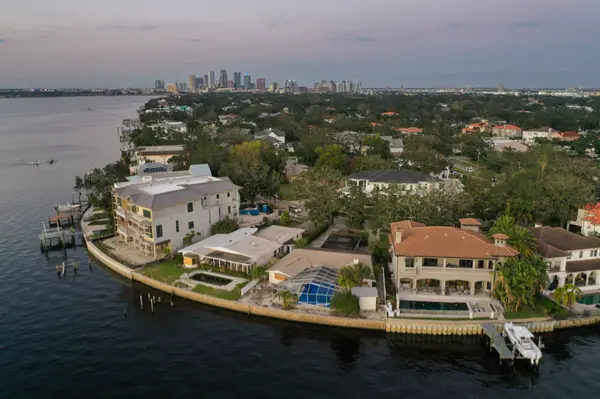
More practically: not all waterfront is comparable, and in South Tampa the variation is considerable. Open-bay frontage may offer expansive views and unobstructed water exposure, while protected canals can provide different advantages for boating and dockage. Canal width, water depth, navigability, bridge clearances, seawall condition, and the physical relationship between the residence and the water can each materially affect a property's utility and appeal. Elevation, flood-zone designation, and applicable construction standards introduce additional variables.
Davis Islands illustrates the range well. Its waterfront inventory encompasses multiple canal configurations, varied lot characteristics, and different water exposures. Two properties separated by a short distance may offer meaningfully different boating access, views, and redevelopment possibilities — none of which a simple "waterfront" designation in a database entry captures.
For buyers and sellers, the most relevant comparable sale is not necessarily the closest waterfront transaction. It is the transaction that most closely reflects the specific characteristics and competitive position of the subject property — a determination that requires judgment, not just a filter applied to MLS records.
Construction Age: Context, Not Conclusion
New construction occupies a visible and active position in South Tampa's luxury market. Contemporary homes typically offer current floor plans, updated mechanical systems, modern building standards, and architectural choices aligned with present buyer preferences. For many buyers, those attributes carry real value.
Yet construction age alone does not reliably explain pricing — and the data from this period offers a useful illustration of why.
Homes constructed in 2015 or later recorded a median sale price of approximately $1.92 million; properties built before 1980 recorded approximately $1.40 million. That relationship reverses when measured by price per heated square foot: older homes produced a median of approximately $525 per square foot, compared with approximately $501 for homes built in 2015 or later.
This does not suggest that older homes are inherently more valuable than newer construction. Several factors shape the comparison. Some older properties occupy highly desirable sites — and, as noted, land-driven transactions can distort per-square-foot figures when the existing improvements are secondary to the underlying parcel. Other older homes have been substantially renovated or retain distinctive architectural qualities that attract buyers for reasons unrelated to their age. Newer homes offer meaningful value through modern functionality, current construction standards, and reduced near-term maintenance exposure.
A straightforward comparison based on construction year, without accounting for location, lot characteristics, condition, and the nature of individual transactions, is likely to produce misleading conclusions in both directions.
What Comparable Sales Actually Require
A conventional comparative market analysis typically anchors to location, square footage, bedroom and bathroom count, and recent transaction prices. Those inputs remain important. In the luxury segment, they are a starting point, not a destination.
For an interior property, a thorough analysis also considers lot configuration, architectural character, renovation history, condition, and the supply of genuinely competing homes. For a waterfront property, navigability, water exposure, docking infrastructure, seawall condition, and elevation enter the equation. For an older home on a desirable site, the analysis may need to separately address existing residential utility and potential redevelopment value — two characteristics that can attract different buyers at substantially different price points.
The objective is not to find properties that look similar in a spreadsheet. It is to identify which properties a qualified buyer would realistically consider as alternatives — and why. That distinction becomes increasingly important as transaction prices rise and the pool of genuinely comparable sales narrows.
What This Means for South Tampa Buyers and Sellers
For sellers, establishing an appropriate asking price requires more than applying a market average to a home's square footage. The analysis should identify competitive advantages, recognize meaningful limitations, and evaluate the realistic alternatives available to the property's likely buyer. Overpricing can be consequential when buyers have multiple property-specific considerations to weigh. Conversely, an overly mechanical valuation approach may fail to recognize characteristics that distinguish a property from the broader market.
For buyers, the same principles apply in reverse. A higher price per square foot does not automatically indicate an overpriced property, just as a lower figure does not automatically represent opportunity. Understanding what drives the purchase price — and which characteristics are genuinely difficult or impossible to replicate — supports more informed acquisition decisions.
South Tampa's luxury market reflects the diversity of its neighborhoods, homesites, architectural periods, and waterfront settings. The sales evidence from this period demonstrates meaningful relationships between transaction prices and characteristics such as lot size, waterfront access, and construction period. It also illustrates why those relationships resist reduction to universal formulas.
The most useful question is not simply what luxury homes are selling for in South Tampa. It is what the market is likely to recognize in a particular property — and how that property compares with the alternatives available to its likely buyer at a specific moment.
That question requires property-specific analysis. It is also where the most consequential advisory work begins.
This analysis builds on our Fall 2026 South Tampa luxury market commentary, examining the property characteristics behind the broader market patterns.
About the Analysis
This commentary draws upon Stellar MLS data for 554 closed single-family residential transactions with sale prices of $1 million or more in ZIP codes 33606, 33609, 33611, and 33629, covering October 1, 2025, through September 30, 2026. The analysis examines sale prices, heated square footage, lot area, waterfront designation, and construction year. Reported figures are descriptive market statistics and do not represent independent appraisals or isolated adjustments for individual property characteristics. Waterfront classifications and other property details reflect information reported in MLS records. Individual property characteristics, renovations, site conditions, and redevelopment potential may require further verification.
About the Author
Jeramiah J. Bustin is a Broker Associate and License Partner with Engel & Völkers South Tampa. A Tampa native with 25 years of residential real estate experience, he specializes in luxury residential properties, waterfront real estate, and property-specific advisory services throughout South Tampa and the greater Tampa Bay area.
Categories
Recent Posts


Jeramiah Bustin
License Partner | Broker Associate | Professional Athlete Advisory | Development Services